
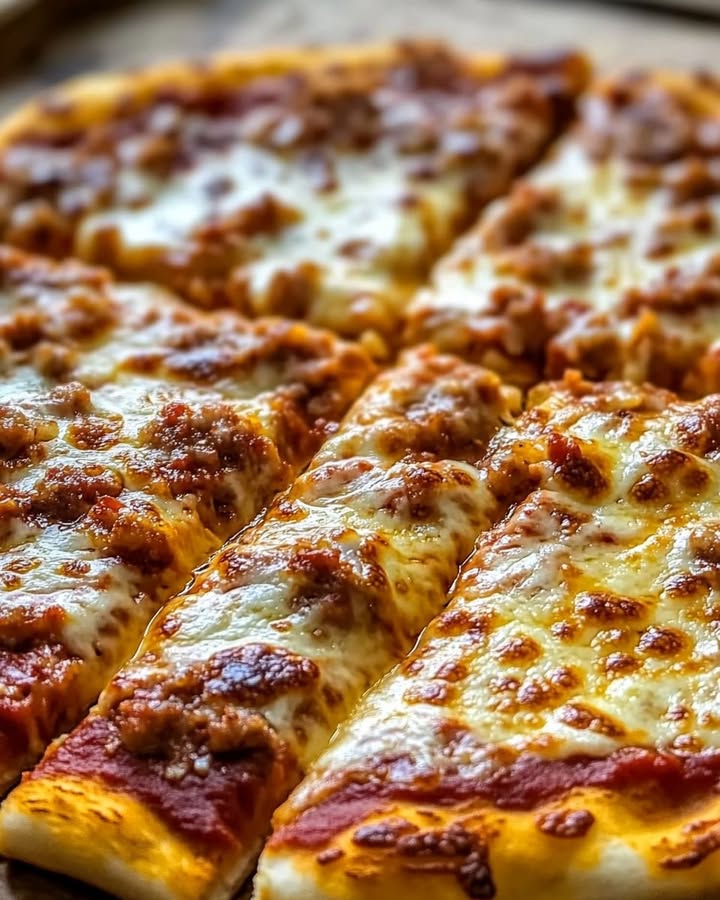
Nostalgie dans l’assiette : La Pizza Scolaire Maison façon Cafét’
Qui d’autre peut instantanément goûter cette pizza rectangulaire si distinctive de l’enfance rien qu’à une bouffée de pâte cuite et de fromage fondu ? C’est plus qu’un repas ; c’est une machine à remonter le temps. J’ai préparé cette Pizza Scolaire Maison pour mes enfants vendredi dernier, et la façon dont leurs yeux se sont illuminés était magique. Ils ont enfin compris mes histoires d’échange de bâtonnets de carottes contre une part supplémentaire ! Cette recette est ma lettre d’amour à ces cantines bruyantes et joyeuses, perfectionnée dans ma propre cuisine.
Une part d’histoire : L’adorée Pizza Scolaire
La « pizza scolaire » occupe une place particulière dans la culture alimentaire. Ce n’est pas une question de technique napolitaine sophistiquée. C’est une question de pâte robuste et moelleuse, d’une couverture de tomate acidulée et de cette couche iconique de fromage bouillonnant et filant qui pouvait survivre au trajet sur le plateau. Bien que ses origines soient modestes, nées de la nécessité de nourrir beaucoup d’enfants rapidement et à moindre coût, son héritage est énorme. Cette version maison moderne capture cette saveur et cette texture classiques, mais vous permet de contrôler la qualité, créant une « pizza maison » à la fois nostalgique et délicieusement fraîche.
Pourquoi vous allez adorer cette recette de Pizza de Cantine
Cette recette est un vrai succès. D’abord, elle est incroyablement simple. La pâte se prépare sans tracas. Ensuite, la saveur est un coup direct de nostalgie—salée, fromagère et réconfortante à souhait. Elle est aussi très polyvalente. Vous voulez ajouter du pepperoni ? Foncez ! C’est la base parfaite pour une aventure de « pizza maison ». Enfin, elle fait l’unanimité. Les enfants l’adorent, et les adultes sont transportés directement à leur période de déjeuner préférée de l’enfance.
Les occasions parfaites pour cette Pizza Scolaire Maison
Cette pizza brille à tellement de rassemblements ! Elle est parfaite pour un match, coupée en carrés faciles à prendre. Servez-la à un anniversaire pour un shot de nostalgie parmi les nuggets. Préparez-la pour un soir de semaine chargé où vous avez besoin d’un dîner sûr. C’est aussi un plat fantastique pour un repas partagé, car elle voyage bien et plaît à absolument tout le monde. Tout événement qui appelle à une nourriture conviviale et à partager est le bon événement pour cette pizza.
Réunir vos ingrédients
Vous avez probablement déjà la plupart des choses dans votre placard ! Voici ce dont vous avez besoin pour votre propre « pizza maison » :
- 1 sachet de levure de boulanger déshydratée
- 350 ml d’eau tiède
- 1 cuillère à soupe de sucre
- 420 g de farine tout usage (type T55)
- 1 cuillère à soupe d’huile d’olive
- 1 cuillère à café de sel
- 1 boîte (environ 425g) de coulis de tomate simple
- 200 g de fromage mozzarella râpé
- 50 g de fromage cheddar râpé
- 1/2 cuillère à café d’origan séché
- 1/2 cuillère à café d’ail en poudre
- 1/4 de cuillère à café de poivre noir
Des substitutions d’ingrédients faciles
Pas de stress si il vous manque quelque chose ! Voici quelques substitutions faciles :
- Farine : Vous pouvez utiliser de la farine à pain pour une croûte un peu plus moelleuse.
- Fromage : Rien que de la mozzarella fonctionne très bien. Une pincée de Parmesan ajoute une belle saveur.
- Coulis de tomate : Utilisez une sauce à pizza déjà assaisonnée pour plus de saveurs d’herbes.
- Épices : Remplacez l’origan par un mélange d’herbes italiennes ou une pincée de basilic.
Préparer votre Pizza Scolaire Maison
Passons à la cuisine ! Suivez ces étapes simples pour une pizza parfaite.
Étape 1 : Réveiller la levure
Commencez par préchauffer votre four à 230°C. Prenez un grand saladier. Versez-y l’eau tiède—elle doit avoir la température agréable d’un bain, pas chaude. Saupoudrez la levure et le sucre. Mélangez doucement. Maintenant, laissez reposer 5 minutes. À votre retour, vous devriez voir une couche mousseuse et crémeuse à la surface. Cette mousse signifie que votre levure est vivante et prête à faire lever votre pâte. Ça sent déjà légèrement le pain sucré.
Étape 2 : Créer la pâte
Ajoutez directement la farine, l’huile d’olive et le sel à l’eau avec la levure. Utilisez une cuillère en bois robuste pour mélanger. Au début, ce sera grumeleux et désordonné. Continuez à mélanger jusqu’à ce qu’une boule de pâte grossière se forme et se détache des parois du saladier. Pas besoin de robot ! Le simple fait de mélanger à la main fait partie du charme. Vous verrez la farine s’incorporer en une masse cohésive et légèrement collante.
Étape 3 : Pétrir pour la perfection
Saupoudrez légèrement votre plan de travail propre avec un peu de farine. Sortez la pâte dessus. Commencez à pétrir ! Utilisez la paume de vos mains pour pousser la pâte loin de vous, puis repliez-la sur elle-même. Tournez-la d’un quart de tour et répétez. Faites cela pendant environ 5 minutes. Vous sentirez la texture se transformer de collante et irrégulière à lisse, élastique et souple. Ce pétrissage développe le gluten, donnant à votre « pizza scolaire » cette tendreté parfaite.
Astuce de pro : Si la pâte colle à vos mains, saupoudrez-les simplement d’un peu plus de farine. N’en ajoutez pas trop, sinon la pâte pourrait devenir dure.
Étape 4 : Façonner la croûte classique
Graissez légèrement votre plaque de cuisson ou votre moule à pizza avec de l’huile ou un spray culinaire. Utilisez un rouleau à pâtisserie pour étaler la pâte en un rectangle qui correspond à votre plaque. Ne vous inquiétez pas de la perfection ! Les bords légèrement irréguliers font partie de son charme rustique et scolaire. Soulevez et transférez délicatement la pâte sur la plaque. Si elle rétrécit, laissez-la reposer 5 minutes—c’est juste le gluten qui se détend. Puis réessayez.
Étape 5 : Sauce et fromage à gogo
Maintenant la partie amusante ! Étalez la sauce tomate uniformément sur la pâte, en laissant juste une petite bordure. Utilisez le dos d’une cuillère en faisant des mouvements circulaires. Ensuite, parsemez généreusement de mozzarella et de cheddar râpés. Regardez les lamelles blanches et oranges créer une magnifique mosaïque colorée. Enfin, saupoudrez uniformément l’origan, l’ail en poudre et le poivre noir sur le fromage. C’est là que l’arôme iconique commence à se dégager.
Étape 6 : Cuire jusqu’au bonheur doré
Glissez soigneusement la plaque dans votre four chaud. La magie opère ici ! Enfournez pour 12 à 15 minutes. Vous attendez deux choses : une croûte dorée et un fromage bouillonnant, légèrement tacheté. Jetez un œil à travers la porte du four et regardez le fromage fondre en un glorieux lac coulant. Votre cuisine sentira absolument divin. Une fois cuit, utilisez des mitons de four pour le sortir.
Étape 7 : La partie la plus dure : La laisser reposer !
Je sais, c’est tentant de couper tout de suite ! Mais laissez la pizza refroidir sur la plaque pendant environ 5 minutes. Cela permet au fromage de se figer un peu pour qu’il ne glisse pas tout entier à la découpe. Cela donne aussi à la croûte une chance de se raffermir. Ensuite, utilisez un coupe-pizza ou un couteau bien aiguisé pour la découper en carrés ou rectangles classiques. Servez et préparez-vous à voir des sourires.
Astuce du chef : Pour une touche d’authenticité supplémentaire, laissez la pizza cuite reposer 10 minutes. Le fromage aura cette texture légèrement plus ferme, « prise à la cantine », qui vous ramène vraiment en arrière.
Votre chronologie de pizza
Cette recette est merveilleusement rapide du saladier à l’assiette !
- Temps de préparation : 15 minutes (pétrissage inclus)
- Temps de cuisson : 15 minutes
- Temps de repos : 5 minutes
- Temps total : Environ 35 minutes
- Kcal : Environ 220 kcal par part
- Parts : 8 généreuses parts
Le secret de la croûte parfaite
Mon petit secret ? J’ajoute parfois une cuillère à soupe de lait en poudre à la farine. C’est une astuce des recettes de boulangerie à l’ancienne ! Cela enrichit subtilement la pâte, lui donnant une mie tendre et savoureuse qui se rapproche remarquablement de ces souvenirs de cantine tant aimés. Essayez-la la prochaine fois pour une couche d’authenticité supplémentaire.
Une anecdote amusante sur le fromage
Ce mélange classique de mozzarella et de cheddar n’est pas seulement pour la couleur. La mozzarella vous donne l’étirement épique, digne d’Instagram. Le cheddar ajoute une saveur plus prononcée et acidulée et aide la couche de fromage à dorer magnifiquement. Ensemble, ils créent l’expérience fromagère nostalgique complète qui définit cette « pizza maison ».
De quoi vous aurez besoin pour la réaliser
Pas besoin d’ustensiles sophistiqués ! Rassemblez simplement :
- Un grand saladier
- Des verres et cuillères doseurs
- Une cuillère en bois ou une spatule
- Un rouleau à pâtisserie
- Une plaque de cuisson à rebords ou un moule à pizza (environ 33×45 cm)
- Des mitons de four
- Un coupe-pizza ou un couteau bien aiguisé
Conserver votre chef-d’œuvre maison
Les restes sont un luxe rare chez moi, mais ça arrive ! Laissez la pizza refroidir complètement à température ambiante. Puis, emballez les parts individuellement ou la plaque entière dans du film alimentaire. Vous pouvez aussi les placer dans un récipient hermétique. Elle se conserve au réfrigérateur jusqu’à 3 jours.
Pour réchauffer, évitez le micro-ondes si possible. Il rend la croûte molle. Placez plutôt une part sur une plaque et réchauffez dans un four préchauffé à 175°C pendant 5 à 10 minutes, jusqu’à ce qu’elle soit chaude et le fromage à nouveau fondu. Pour une solution rapide, un four à grille fait des merveilles.
Vous pouvez aussi congeler cette pizza. Emballez des parts refroidies dans du film alimentaire puis du papier aluminium, ou utilisez un sac de congélation. Elle se conserve environ 2 mois. Réchauffez les parts congelées directement au four, en ajoutant quelques minutes de plus au temps de réchauffage.
Mes meilleurs conseils pour réussir
Voici comment vous assurer que votre pizza soit parfaite à chaque fois :
- La température de l’eau est cruciale : Trop chaude, et vous tuerez la levure. Trop froide, et elle ne se réveillera pas. Visez une eau tiède au toucher, environ 40-45°C.
- Ne négligez pas le pétrissage : Ces 5 minutes de pétrissage sont non négociables pour la bonne texture. C’est un excellent exutoire anti-stress, en plus !
- Préchauffez complètement : Assurez-vous que votre four est bien à 230°C avant d’enfourner. Un départ à chaud donne un bon coup de levain à la croûte.
- Râpez votre propre fromage : Le fromage pré-râpé contient des anti-agglomérants qui peuvent rendre la fonte moins lisse. Pour la fonte la plus coulante et la meilleure, râpez un bloc vous-même.
Servez-la avec style
La présentation fait partie du plaisir ! Essayez ces idées :
- Servez sur une grande planche en bois, coupée en carrés, comme un self de cantine.
- Proposez de petits bols de piment rouge broyé, de Parmesan râpé et d’origan supplémentaire pour des garnitures DIY.
- Accompagnez de côtés « déjeuner à l’école » : une simple salade verte, des bâtonnets de carottes ou des quartiers de pomme.
- Pour une fête, empilez les carrés sur un présentoir étagé pour une prise facile.
6 délicieuses variantes à essayer
Vous adorez cette recette de base ? Voici quelques déclinaisons amusantes pour votre « pizza maison » :
- Classique Pepperoni : Ajoutez une couche de tranches de pepperoni sous le fromage. Leurs bords deviennent délicieusement croustillants.
- Pizza Taco : Après cuisson, garnissez de laitue râpée froide, de tomates coupées en dés et de chips de maïs émiettées. Arrosez de salsa et de crème fraîche.
- Pizza Petit-déjeuner : Utilisez la croûte, mais garnissez d’œufs brouillés, de miettes de saucisse cuite et de fromage cheddar. Cuisez comme indiqué.
- Pizza Blanche aux Légumes : Omettez la sauce tomate. Badigeonnez la pâte d’huile à l’ail, puis garnissez de ricotta, de mozzarella et de champignons et épinards sautés.
- Poulet Barbecue : Utilisez de la sauce barbecue à la place de la sauce tomate. Garnissez de poulet cuit effiloché, d’oignon rouge et de mozzarella.
- Style Supreme : Faites le plein ! Ajoutez des poivrons, des oignons, des champignons et des olives finement tranchés avant le fromage.
Si vous avez envie d’une autre expérience de pizza roulée et amusante, vous devez essayer cette fantastique recette de Stromboli italien farci aux viandes savoureuses et au fromage. Pour une solution pizza super rapide, ma Pizza sur Pain à l’Ail façon Texas Toast faite à la friteuse sans huile est une bouée de sauvetage les soirs de semaine chargés. Et pour l’ultime plat réconfortant fusion, ce Pain Spaghetti fondant et coulant est une pure joie fromagère. Si vous souhaitez explorer une autre formule de pizza scolaire classique, consultez cette détaillée recette de Pizza Scolaire Délicieuse avec une sauce maison.
Erreurs courantes à éviter
Erreur 1 : Utiliser de l’eau trop chaude pour la levure
C’est l’ennemi numéro un de la pâte. Si votre eau est trop chaude, elle tuera la levure, vous laissant avec une croûte plate et dense qui ne lèvera pas. On pense souvent que plus chaud est plus rapide, mais la levure est un organisme vivant ! Pour éviter cela, utilisez de l’eau tiède au poignet, comme un biberon de bébé. Une bonne règle est entre 40°C et 45°C. Si vous n’avez pas de thermomètre, elle doit être agréablement tiède, pas chaude.
Erreur 2 : Ne pas laisser reposer la pâte pendant le façonnage
Vous étalez votre pâte, mais elle revient sans cesse comme un élastique. Frustrant, n’est-ce pas ? Cela arrive parce que le gluten est trop tendu. L’erreur est de lutter contre ! Soyez patient. Quand la pâte résiste, couvrez-la simplement avec le saladier ou un torchon et laissez-la reposer 5-10 minutes. Ce « repos en masse » permet au gluten de se détendre. Ensuite, elle s’étalera facilement pour s’adapter à votre plaque.
Erreur 3 : Surcharger avec des garnitures humides
C’est tentant d’empiler des légumes frais comme des champignons, des oignons ou des poivrons. Mais ils libèrent beaucoup d’eau à la cuisson. L’erreur est de les mettre crus. Cela peut cuire la croûte à la vapeur et la rendre molle. Pour éviter une pizza détrempée, faites d’abord revenir les légumes les plus aqueux pour évacuer l’excès d’humidité. Puis, épongez-les avec du papier absorbant avant de les disperser sur votre sauce.
Erreur 4 : Découper immédiatement après la cuisson
Vous sortez cette magnifique pizza bouillonnante du four et vous y allez immédiatement avec le couteau. Stop ! Le fromage est comme de la lave en fusion et va glisser tout entier. La croûte a aussi besoin d’une minute pour se fixer. La laisser refroidir 5 minutes sur la plaque est une étape cruciale. Cela permet à tout de se stabiliser, assurant des parts nettes où le fromage reste en place.
Le fromage est une excellente source de protéines pour construire et réparer les muscles. Pour des informations nutritionnelles détaillées sur la teneur en protéines des différents fromages, vous pouvez consulter la base de données officielle de composition des aliments française.
Questions Fréquemment Posées
Puis-je préparer la pâte à pizza scolaire à l’avance ?
Absolument ! Vous pouvez préparer la pâte un jour à l’avance. Après pétrissage, placez-la dans un saladier légèrement huilé, couvrez hermétiquement de film alimentaire et mettez-la au réfrigérateur. Le froid ralentit la levure, permettant aux saveurs de se développer davantage. Le lendemain, sortez la pâte environ une heure avant de prévoir de cuire. Laissez-la revenir à température ambiante sur le comptoir avant de l’étaler. Cette méthode de « fermentation à froid » donne souvent une croûte encore meilleure et plus savoureuse pour votre pizza maison.
Pourquoi ma croûte à pizza est-elle dure et caoutchouteuse ?
Une croûte dure est généralement causée par deux choses : trop de farine ou trop de pétrissage. Quand vous ajoutez un excès de farine pendant le pétrissage pour combattre le collage, la pâte devient dense. De même, trop pétrir développe trop de gluten, la rendant dure. Visez une pâte légèrement collante mais qui ne vous couvre pas entièrement les mains. Pétrissez juste jusqu’à ce qu’elle soit lisse et élastique, environ 5 minutes à la main. Souvenez-vous, c’est une croûte moelleuse style cantine, pas un bagel !
Puis-je utiliser un autre type de fromage ?
Oui, vous pouvez expérimenter ! Le combo mozzarella-cheddar est classique pour sa saveur et sa fonte. Pour un goût plus authentique de « pizza scolaire », restez-y. Mais pour s’amuser, essayez un mélange de provolone et de mozzarella pour une fonte plus douce. Évitez d’utiliser uniquement des fromages durs comme le Parmesan seul, car ils ne donneront pas cette couche coulante. Un « mélange mexicain » ou « mélange italien » de fromage râpé du commerce peut aussi fonctionner en dépannage pour votre pizza maison.
Ma pâte n’a pas moussé. Qu’est-ce qui n’a pas marché ?
Si votre mélange de levure n’a pas moussé après 5-10 minutes, la levure est probablement inactive. Cela peut arriver si la levure est vieille, ou si l’eau était trop chaude ou trop froide. La recette ne fonctionnera pas correctement sans levure active. La meilleure solution est de recommencer avec un nouveau sachet de levure. Vérifiez toujours la date de péremption sur votre levure, et conservez les sachets ouverts au réfrigérateur ou au congélateur pour les garder frais plus longtemps.
Quelle est la meilleure plaque à utiliser pour cette recette ?
Une plaque de cuisson à rebords standard (comme une demi-plaque, environ 33×45 cm) est parfaite. Elle donne la forme rectangulaire classique. Vous pouvez aussi utiliser une grande plaque à pizza ou un lèchefrite. L’essentiel est de la graisser pour que la croûte ne colle pas. Pour un fond extra-croustillant, vous pouvez préchauffer la plaque au four quelques minutes avant d’y ajouter soigneusement la pâte façonnée, mais c’est une manœuvre avancée. Une plaque graissée normale fonctionne très bien.
Comment m’assurer que le fond de la croûte n’est pas détrempé ?
Un fond détrempé est souvent dû à une sous-cuisson ou à trop de garnitures humides. D’abord, assurez-vous que votre four est complètement préchauffé. Un four chaud donne un bon départ rapide à la croûte. Ensuite, faites cuire la pizza sur la grille du bas-milieu de votre four. Cela rapproche le fond de la source de chaleur. Enfin, comme mentionné, pré-cuire les légumes qui libèrent de l’eau. Vérifier que le fond est doré avant de sortir la pizza est la meilleure garantie.
Puis-je ajouter des garnitures à la viande sur cette pizza scolaire ?
Bien sûr ! Le pepperoni est le choix le plus populaire. Disposez simplement les tranches sur la sauce avant d’ajouter le fromage. Pour la viande hachée ou la saucisse, vous devez d’abord la cuire complètement à la poêle, égoutter tout l’excès de graisse et la laisser refroidir un peu avant de la parsemer. Ne mettez jamais de viande crue sur la pizza, car elle ne cuira pas à cœur pendant le court temps de cuisson. Ajouter un peu de lard coupé en dés et cuit est aussi un délice.
Y a-t-il un moyen de rendre cette recette plus saine ?
Il y a quelques substitutions simples. Vous pouvez utiliser de la farine complète pour la moitié de la farine blanche pour ajouter des fibres. Pour le fromage, optez pour de la mozzarella à teneur réduite en matières grasses. Vous pouvez aussi enrichir la sauce avec des légumes finement hachés et pré-cuits comme des épinards, des poivrons ou des champignons pour ajouter des nutriments. Et, bien sûr, servir avec une grande salade aide à équilibrer le repas.
Puis-je congeler la pizza déjà cuite ?
Oui, cette pizza se congèle très bien. Laissez la pizza cuite refroidir complètement. Coupez-la en parts, emballez chaque part individuellement dans du film alimentaire, puis placez-les dans un grand sac de congélation. Chassez un maximum d’air. Pour réchauffer, vous n’avez même pas besoin de décongeler. Placez simplement la part congelée sur une plaque dans un four à 190°C pendant 10 à 15 minutes, ou jusqu’à ce qu’elle soit chaude à cœur. La texture se maintient étonnamment bien.
Que puis-je servir avec cette pizza pour un repas complet ?
Cette pizza est un repas en soi ! Mais pour l’accompagner, pensez aux côtés classiques. Une simple salade verte avec une vinaigrette italienne est parfaite. Du pain à l’ail ou des ficelles sont toujours appréciés. Pour une option plus légère, servez avec des fruits frais comme du raisin ou des quartiers de pomme. Si vous nourrissez une grande foule, une simple salade de pâtes ou un plateau de crudités avec une sauce au fromage blanc fait un excellent compagnon à ce plat principal nostalgique.
Si vous êtes tombé(e) amoureux/amoureuse de faire de la pizza à la maison, parcourez notre collection complète de recettes de pizzas délicieuses et faciles pour plus d’inspiration.
Bonnes Cuissons !
Voilà—votre ticket retour vers le meilleur moment de la journée d’école, sans ticket de cantine requis. Cette Pizza Scolaire Maison, c’est plus que de la nourriture. C’est partager un sourire, un souvenir et un morceau sérieusement délicieux de bonté fromagère avec les gens que vous aimez. Alors préchauffez ce four, rendez vos mains un peu pâteuses, et créez de nouveaux souvenirs heureux autour de votre propre table de cuisine. Savourez chaque bouchée !
Equipment
- Plaque à pâtisserie
- Rouleau à pâtisserie
- Grand bol de mélange
- Cuillère en bois ou spatule
- Manique
Ingrédients
- 1 paquet levure sèche active
- 1 1/2 tasses eau tiède
- 1 cuillère à soupe sucre
- 3 1/2 tasses farine tout usage
- 1 cuillère à soupe huile d'olive
- 1 cuillère à café sel
- 1 boîte sauce tomate 15 oz
- 2 tasses fromage mozzarella râpé
- 1/2 tasse fromage cheddar râpé
- 1/2 cuillère à café origan séché
- 1/2 cuillère à café poudre d'ail
- 1/4 cuillère à café poivre noir
Instructions
- Préchauffez votre four à 450°F (230°C).
- Dans un grand bol, versez l'eau tiède et ajoutez la levure et le sucre, puis laissez reposer pendant 5 minutes.
- Ajoutez la farine, l'huile d'olive et le sel au mélange de levure et mélangez jusqu'à obtenir une pâte.
- Pétrissez la pâte sur un plan de travail fariné pendant environ 5 minutes.
- Graissez légèrement une plaque à pâtisserie et abaissez la pâte en un rectangle qui s'adapte à la plaque.
- Étalez la sauce tomate sur la pâte en laissant une petite bordure.
- Ajoutez le fromage mozzarella et le cheddar, puis saupoudrez d'origan, de poudre d'ail et de poivre.
- Enfournez pendant 12 à 15 minutes jusqu'à ce que la croûte soit dorée et le fromage bouillonnant.
- Laissez refroidir pendant 5 minutes avant de découper en carrés.